Wanting to move on from the copper wire connections of the past and bring your broadband into the 21st century? Perhaps an upgrade is in order!
For a fast internet connection, you’re looking at fixed fibre broadband or 5G broadband – but what does that actually mean? And which one is best for you? Let’s compare!
Fixed Fibre VS 5G Broadband: What is Fixed Fibre?
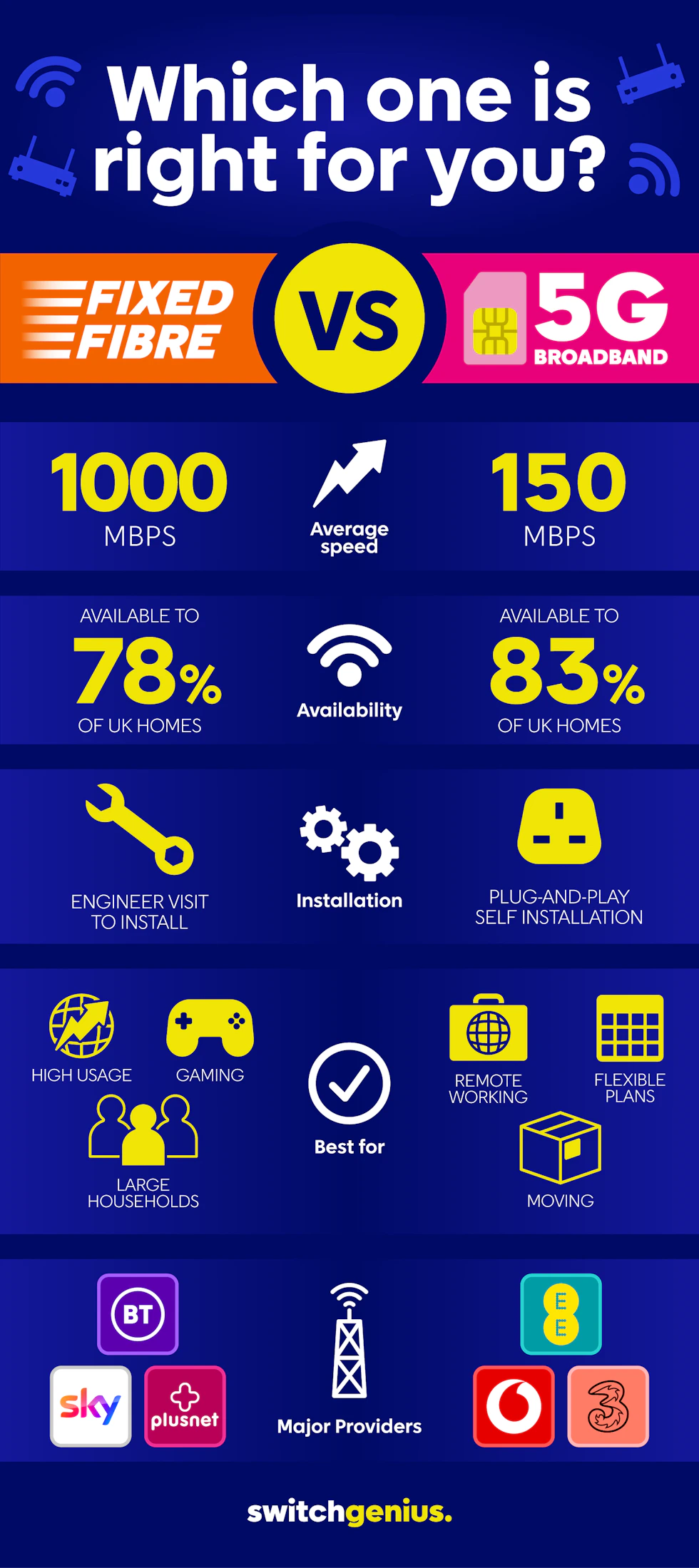
Fixed fibre is credited as the fastest and most reliable type of home broadband. It uses a 100% fibre-optic connection (hence the name!) to your home – delivering data through pulses of light.
Also known as Full fibre or FTTP, it is faster than older-style connections and doesn’t require a phone line, giving you more freedom on where to put your router! As full fibre becomes more popular, its availability across the UK is growing too.
Fixed Fibre VS 5G Broadband: What is 5G broadband?
5G broadband works the same way as data on your phone – delivering an internet connection via mobile airwaves. With 5G broadband, your router uses an internal SIM card to create a wireless hotspot throughout your home. This connection requires no phone line and can be easily set up in minutes, with no engineer visits needed.
It’s important to check the 5G coverage in your area to determine if the connection is strong enough for your day-to-day WiFi needs.
Fixed Fibre VS 5G Broadband: Is 5G broadband the same as mobile broadband?
Whilst 5G broadband and mobile broadband both rely on the 5G or 4G network, they have different uses. 5G broadband is designed to keep you connected whilst at home, whereas mobile broadband devices tend to be made for portability and on-the-go connection. Compare the latest deals using our mobile broadband comparison tool.
Fixed Fibre VS 5G Broadband: Is 5G broadband as good as fibre?
When deciding between fixed fibre broadband and 5G broadband, it’s important to factor in what you need from your internet connection. Fixed fibre provides a fast, strong, and reliable connection, undisrupted by heavy usage – this is useful for large households, seamless gaming, and smart homes. However, fixed fibre isn’t yet available to all households in the UK.
If you live in an area with good 5G coverage and are looking for an affordable and flexible plan, 5G broadband may be better suited. Being quick and easy to install, with shorter plans available, 5G broadband offers a lot of freedom whilst delivering speeds that are more than fast enough for daily internet use. Ideal for renters and students.
Genius Tip: Full fibre isn’t always available in rural areas – making 5G broadband a great alternative! You can find our guide to rural broadband here.
Fixed Fibre VS 5G Broadband: Is 5G internet faster than fibre?
A fixed fibre connection provides faster speeds than a 5G connection, with fixed fibre averaging 1000Mbps (1Gbps), and 5G averaging 150Mbps.
Whilst this sounds like a big difference, both are more than enough for regular household use. For example, the recommended speed needed for 4K streaming is 50Mbps.
Genius Tip: We know that the world of broadband can be a big confusing jumble of jargon. That’s why we put together a beginner’s guide to how broadband works – you’re welcome!
Fixed Fibre VS 5G Broadband: Is 5G internet cheaper than fibre?
Overall, 5G internet tends to be cheaper than fibre-based internet – especially when you take into account contract length, with some 5G contracts running on a month-by-month basis. However, it’s always worth using our broadband comparison tool to discover the best limited-time offers.