Google’s latest Pixel ecosystem just got much bigger.
Google has wrapped up its Made by Google 2026 showcase, revealing its latest generation of Pixel phones alongside a new smartwatch, upgraded earbuds and its first ever answer to Apple’s AirTag.
AI was unsurprisingly a major theme too, with Google’s new Tensor G6 processor and Gemini Intelligence powering a growing number of features across its devices.
Here’s everything Google announced.
Pixel 11 series leads the way
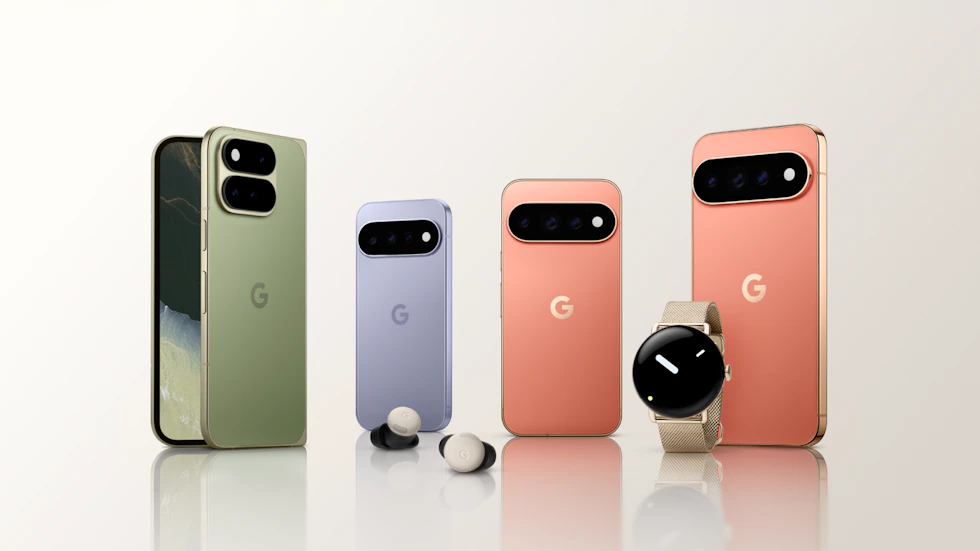
The headline announcement was the Google Pixel 11 series, consisting of four phones:
- Pixel 11
- Pixel 11 Pro
- Pixel 11 Pro XL
- Pixel 11 Pro Fold
All four run Android 17 and Google’s new Tensor G6 processor, which promises 25% faster web browsing, 15% quicker app launches and significantly more processing power for on-device AI.
Visually, Google hasn’t completely reinvented the Pixel. Instead, the familiar camera bar has been slimmed down and redesigned with edge-to-edge glass.
The standard Pixel 11 gets a larger 48MP main camera sensor and increases maximum Super Zoom from 20x to 30x. It also now starts with 256GB of storage.
The Pixel 11 Pro and Pro XL step things up with brighter 3,600-nit displays, improved durability and up to 120x Pro Zoom. They also introduce HiLight, a ring of LEDs around the camera flash that can display colour-coded notifications while your phone is face down.
Then there’s the Pixel 11 Pro Fold, which is almost 10% lighter and around 1mm thinner than its predecessor. Google has redesigned its hinge and strengthened the body too, claiming it’s three times more durable than the previous Fold.
UK prices start at £879 for the Pixel 11, rising to £1079 for the Pro, £1279 for the Pro XL and £1799 for the Pro Fold. The phones are available to pre-order now ahead of release on 20th August.
Full pricing structure:
Google Pixel 11
- 256GB, 12GB RAM – £879
- 512GB, 12GB RAM – £999
- Colours – Frost, Hibiscus, Pistachio, Obsidian
Google Pixel 11 Pro
- 256GB, 12GB RAM – £1079
- 512GB, 16GB RAM – £1199
- 1TB, 16GB RAM – £1429
- Colours – Canyon, Olive, Fog, Obsidian (matte)
Google Pixel 11 Pro XL
- 256GB, 12GB RAM – £1279
- 512GB, 16GB RAM – £1399
- 1TB, 16GB RAM – £1629
- Colours – Canyon, Olive, Fog, Obsidian (matte)
Google Pixel 11 Pro Fold
- 256GB, 12GB RAM – £1799
- 512GB, 16GB RAM – £1919
- 1TB, 16GB RAM – £2149
- Colours – Olive, Obsidian
Pixel Watch 5 puts more focus on health
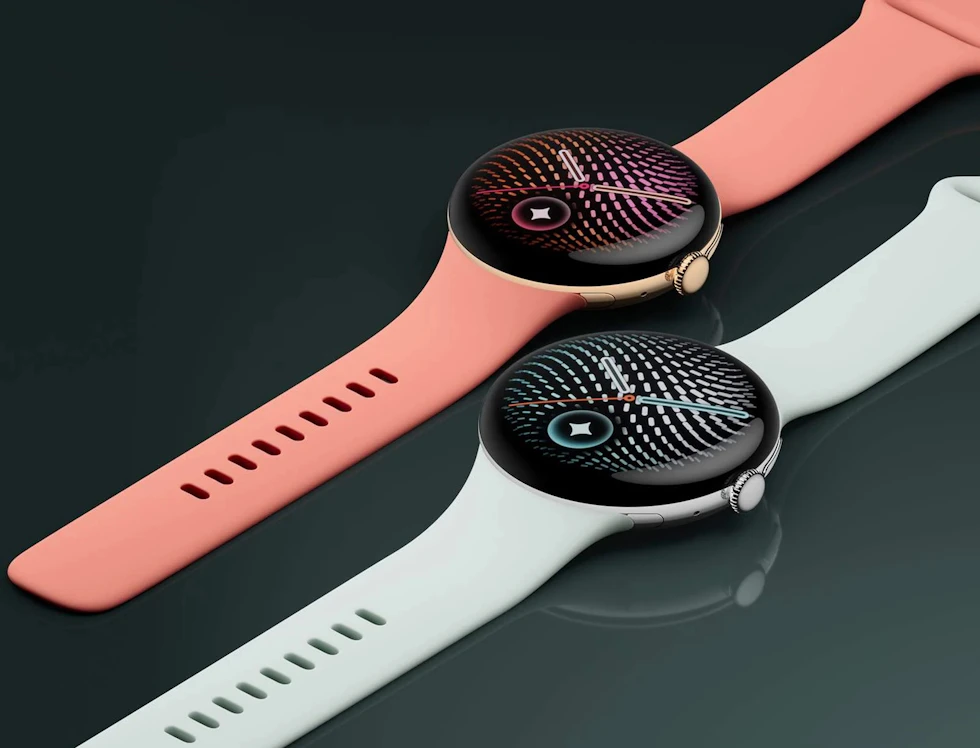
Next up is the Google Pixel Watch 5, available once again in 41mm and 45mm sizes.
The design remains familiar, but underneath there’s a new Snapdragon W5 Gen 2 Accelerated processor. Google says performance is 20% faster than the Watch 4, while storage has doubled to 64GB.
Google’s biggest changes concern health and AI.
New Health Guardian tools include breathing emergency detection alongside longer-term wellness trends covering areas such as blood pressure, sleep breathing quality and metabolic health.
Availability varies by region, and Google stresses that some of these measurements are intended as wellness information rather than medical diagnoses.
There’s also improved GPS tracking and deeper Gemini Intelligence integration. Raise your wrist and you can use Gemini to start workouts, set timers or retrieve information, with some basic actions now available offline.
Battery life reaches up to 30 hours on the 41mm version and 40 hours on the 45mm, while Battery Saver can stretch the larger model to 72 hours.
The Pixel Watch 5 starts at £369 for 41mm or £399 for 45mm in the UK and launches on 20 August.
Full pricing structure:
41mm
- 4G LTE + Bluetooth/WiFi – £469
- Bluetooth/WiFi – £369
- Colours – Polished Silver (Fog active band), Champagne Gold (Canyon active band), Satin Pyrite (Olive active band), Matte Black (Obsidian active band)
45mm
- 4G LTE + Bluetooth/WiFi – £499
- Bluetooth/WiFi – £399
- Colours – Polished Silver (Fog active band), Satin Pyrite (Olive active band), Matte Black (Obsidian active band)
Pixel Tag finally gives Google an AirTag rival
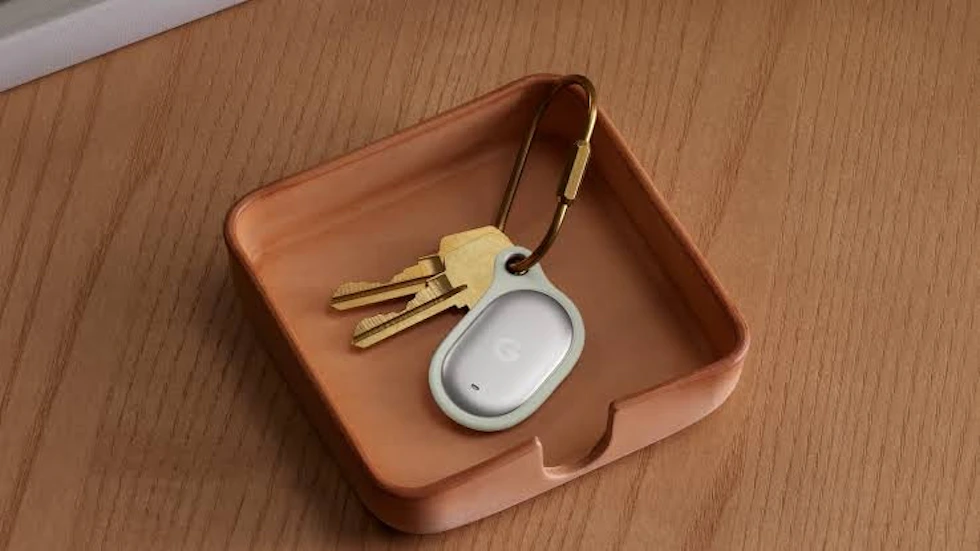
One of the most interesting announcements wasn’t a phone at all.
The Google Pixel Tag is the company’s first own-brand item tracker and a direct rival to Apple’s AirTag.
Attach one to your keys, put one in your bag or slip one into your luggage and you’ll be able to locate it through Google’s Find Hub network, which draws on more than one billion Android devices.
Ultra-Wideband and Bluetooth Channel Sounding provide precision finding with directional and distance information when you’re nearby, while a built-in speaker helps you track down something that’s hiding under the sofa.
It works in reverse too: press the button on Pixel Tag and it’ll ring your missing phone.
Pixel Tag is IP67 water and dust resistant, uses a replaceable battery lasting up to a year and can be shared with as many as 10 people.
UK pricing is £29.99 for one or £99 for four, with Pixel Tag arriving on 11 November 2026.
Pixel Buds Pro 2 get smarter – but there’s no Pro 3
Google didn’t announce a new generation of earbuds, but existing Pixel Buds Pro 2 and Pixel Buds 2a are getting some useful upgrades.
Pixel Buds Pro 2 are gaining Dynamic ANC, which automatically compensates for small changes in the seal around your ear to maintain effective noise cancellation.
Gemini will also be able to change audio settings using voice commands, while upgraded Live Translate can help you understand more than 70 languages in near real time.
There’s even some clever integration with Pixel Watch. When your watch detects that you’ve fallen asleep, compatible Pixel Buds can automatically pause your audio, disable touch controls and silence notifications.
Pixel Buds Pro 2 are also getting a new Olive colour, with the new software features rolling out from September.
Gemini is becoming even harder to avoid
Hardware might have taken centre stage, but Google’s broader message was clear: Gemini is increasingly becoming the glue holding the Pixel ecosystem together.
Gemini Intelligence can use information from compatible apps – with your permission – to proactively surface useful details. In the UK, that might mean bringing up your calendar availability when someone asks when you’re free or displaying relevant information without you having to search for it manually.
Other Pixel 11 additions include Rambler, which cleans up filler words when you’re using voice typing, and an accessibility feature capable of converting American Sign Language captured through the Pixel camera into text.
The camera is getting smarter too. Magic Capture can simultaneously capture photos and video before selecting and improving the best shots, while Camera Looks lets you customise the visual style of your photos before you take them.
Circle to Search can now work directly through the camera viewfinder, and Pro phones gain Creator Suite features including a built-in teleprompter and improved video organisation.
A bigger Pixel ecosystem than ever
Made by Google 2026 wasn’t about one radical new gadget. Instead, Google used the event to strengthen virtually every part of its Pixel ecosystem.
The Pixel 11 phones are mostly careful refinements, with better cameras, faster AI and improved durability rather than dramatic redesigns. Pixel Watch 5 follows a similar approach, putting its biggest upgrades into software and health tracking.
Pixel Tag might actually be the surprise highlight. Android users have waited a long time for Google to produce its own AirTag alternative, and tight integration with Find Hub, Pixel Watch, Buds and Gemini could make it one of Google’s most useful accessories.
Add increasingly connected Gemini features across phones, watches and earbuds, and Google’s ultimate goal is becoming obvious: it doesn’t just want you to buy a Pixel phone – it wants Pixel to become an entire ecosystem.