What actually is an energy tariff? And how does it affect your monthly bill? As energy prices fluctuate, it’s more crucial than ever to make sure you’re on the right one.
When shopping around for an energy provider that suits you, it’s important to understand exactly what you’re looking for – that’s why we’ve put together this handy guide to energy tariff types!
What is a Fixed Energy Tariff?
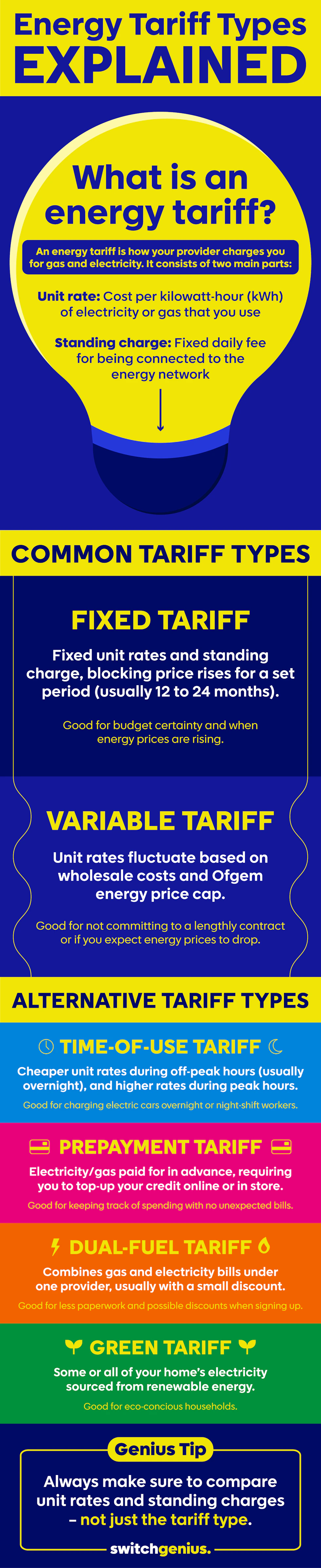
A fixed energy tariff is exactly what it sounds like: a tariff with fixed unit rates and a fixed standing charge.
With a fixed tariff, prices are locked – with price rises blocked for a set period (usually 12 to 24 months). This makes financial planning easier and protects your wallet when energy prices rise.
However, fixed prices also mean that if market prices drop, you’ll be missing out on potential savings.
What is a Variable Energy Tariff?
A variable energy tariff changes with the market – with the unit price you pay going up or down based on factors such as wholesale energy costs and supplier changes.
A variable tariff is often the default when switching suppliers – or when a fixed-price deal ends – so you’ll often see Standard Variable Tariffs (SVT) when shopping for deals. Variable tariffs tend to be more flexible and usually don’t charge exit fees when switching suppliers.
With a variable tariff, you can take advantage of any energy price drops, which can be a nice surprise to your savings; however, this can be a double-edged sword, as when prices go up, so does your bill.
What is a Time-of-use Energy Tariff?
With a time-of-use tariff, cheaper unit rates apply during off-peak hours (usually overnight), and higher rates apply during peak hours.
Peak hours are often between 4 pm and 7 pm, with off-peak hours around midnight to 5 am. Depending on your lifestyle and schedule, this type of tariff may work to your advantage. These savings can pay off if you shift energy-heavy tasks to off-peak hours – like running the washing machine or charging an electric car.
Within time-of-use tariffs, there are static tariffs (such as Economy 7) and dynamic tariffs. With a static tariff, the rates are fixed, with regular blocks of time set in advance, giving you a set schedule for your energy usage. Dynamic tariffs have rates that change hour-by-hour, based on wholesale market conditions – occasionally, this can even result in negative pricing, where you are effectively paid to use energy!
Genius Tip: Time-of-use tariffs generally require a smart meter capable of half-hourly consumption readings to sign up. Thinking of installing a smart meter? Learn more about the pros and cons of smart meters here.
What is a Prepayment Energy Tariff?
A prepayment tariff is exactly that – a prepaid tariff! With this type of tariff, you pay for your energy by topping up your credit online or in-store (usually at convenience stores, petrol stations, or post offices).
This kind of tariff can help with keeping track of spending, eliminating unexpected bills – however depending on use, some months can be more expensive than others – so be sure to factor this into your budget if opting for a prepayment energy tariff.
What is a Dual-Fuel Energy Tariff?
A dual-fuel tariff is where you buy your gas and electricity from the same supplier. You’ll receive a combined bill, giving you less paperwork to deal with – plus providers will often offer a discount for bundling gas and electricity.
Whilst it is convenient, it isn’t always cheaper to bundle gas and electricity – so be sure to compare single fuel rates when shopping around. We’ve made this easy to do with our energy comparison tool.
Genius Tip: Having the same provider for gas and electricity does not automatically mean you’re on a dual-fuel tariff – make sure to check your plan details to clarify what tariff you’re on.
What is a Green Energy Tariff?
Green energy tariffs make use of green and renewable energy, offsetting the fossil fuel-based electricity distributed through the national grid. Each year, suppliers invest more profits back into green energy projects, bolstering the renewable energy sector.
As all energy is distributed through the national grid, it isn’t possible to choose the source of energy that comes directly to your house – so how does a green tariff work? On a green tariff, your supplier tracks your household usage, then uses your payments to buy an equivalent amount of renewable energy to feed clean energy back into the grid.
How to pick the right energy tariff?
We get it, comparing suppliers and tariffs can be overwhelming – to help clear the confusion, here are our top tips for choosing the right supplier and tariff for you:
- Make sure to compare both unit rates and standing charges – not just tariff types.
- Always check for exit fees.
- Keep note of how long your fixed term is, making sure it will work for your situation.
- Be sure to consider what works with your lifestyle and your energy usage habits.