Online security doesn’t need to come at a premium, but are you truly protected otherwise?
VPNs are a great way to stay safe online, encrypting your internet connection and masking your IP address to make it harder – or even virtually impossible – for someone to get to you and your data.
The problem for some is, the top protection and providers do come at a cost. Usually not a major amount, but if you’re not familiar with VPNs and are just looking to test it out without committing, you may turn to free options.
It’s not an entirely bad shout; there’s plenty of good no-cost VPN providers out there, with even some of the mainstream options offering a less-frills free version.
However, are these VPNs really able to keep you as safe as paid ones?
What is a free VPN and why are they popular?
A free VPN works the same way as a standard VPN – encrypting your connection and hiding your IP. On the surface, it offers a quick and cost-effective way to boost online privacy.
Free VPNs are popular because they remove the barrier of entry – no payment details required, instant downloads, and more often than not simple UI and apps.
The problem is, VPNs aren’t cheap to operate, especially if more users are using the providers’ service. The costs begin to rise significantly as they scale to maintain high speeds and security.
For free VPNs, they need to recoup money wherever they can, and that generally comes from ads. They may also start limiting the service, taking some higher usage features and locking them behind a paywall.
How do they differ from paid VPNs?
The core technology between free and paid VPNs is similar, but the funding model creates major differences in performance, privacy, and features.
Key differences
- Free VPNs: Often limited speeds, data caps, fewer servers, and weaker security
- Paid VPNs: Faster speeds, unlimited data, stronger encryption, and more features
Quick comparison
| Free VPN | Paid VPN | |
| Security | Basic – May lack modern protocols | Advanced encryption – Stronger, regularly updated security |
| Data usage | Capped – Usually a restriction on how much data can be used each month | Unlimited – No limit to how much data used |
| Privacy | May log data – Some providers collect and share user data, defeating the objective of a VPN for some | Strict no-logs policies – A main selling point for top providers is they are more likely to undergo audits to ensure no user logs are kept and shared |
| Performance | Slower – Often suffer from overcrowded servers, leading to slower speeds and buffering | Faster & more stable – Able to invest in larger, more constant servers |
The hidden risks of free VPNs
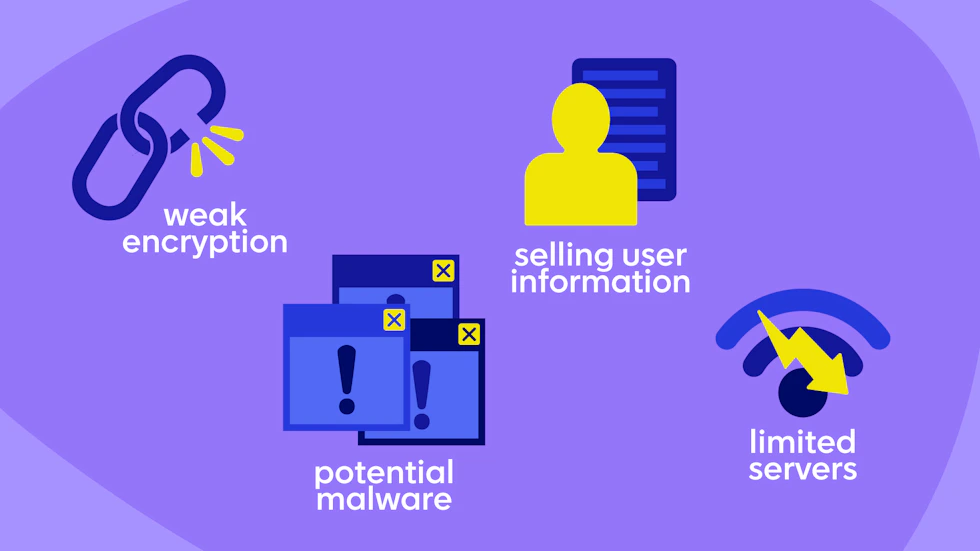
While some free VPNs are fully legitimate, others do come with serious trade-offs, and you should always be sure to play it safe and stick to those that have many downloads and good reviews already.
VPNs are all about keeping your data safe, but oftentimes with free services they keep your data logs, tracking your browser activity and selling the data to third parties. This undermines the very purpose of using a VPN for most people.
Security is also more of an issue as it tends to be weaker due to free VPNs taking shortcuts in a way, using things like outdated encryption, keeping poorly maintained services, or lack essential features such as kill switches (a feature that automatically blocks your device from accessing the internet if the VPN connection drops out).
There’s also the risk of data breaches, with reports showing some free VPN databases exposing sensitive user information due to weak security practices.
Are any free VPNs actually safe?
Yes, but it should be stressed that this does depend on the provider.
The safest free VPNs tend to be “freemium” versions offered by reputable paid providers, rather than completely independent apps.
ProtonVPN is regarded as the best overall free VPN, with industry-leading privacy standards, global server network, unlimited data and more that rates it high on many peoples lists. Even still, it comes with its drawbacks – PC Mag described high latency scores in testing.
PrivadoVPN is also a strong option, offering a good choice of fast servers. It, too, isn’t without fault, this time coming due to its data cap.
Should you use a free VPN or upgrade?
A free VPN can be suitable for light, low-risk use such as occasional browsing on public Wi-Fi. However, for anything involving sensitive data (like banking, streaming, or regular use), the risks often outweigh the savings.
If you’re looking for online security, the truth is you will have to pay for it. But the good news is, many of the top UK VPN providers don’t cost an arm and a leg. They’re surprisingly cost effective, especially if you pay for a year upfront.
Plus, most offer either a few day’s free trial or a money-back guarantee, so you can try the service without properly committing.
Genius Tip: Check out the SwitchGenius VPN comparison page to find great deals on top providers that offer the the best features you could want from a VPN.